India cuts extreme poverty from 27.1% to 2.6% in 12 years
According to the World Bank's latest brief on India, 27.1% of the population lived on less than $3 a day in 2011; by 2023 it was 2.6%. Using the $4.20 line, around 496 million people moved out of poverty. The report itself warns that gains are uneven: youth unemployment is rising, and more than half of the remaining poor live in one belt of states.
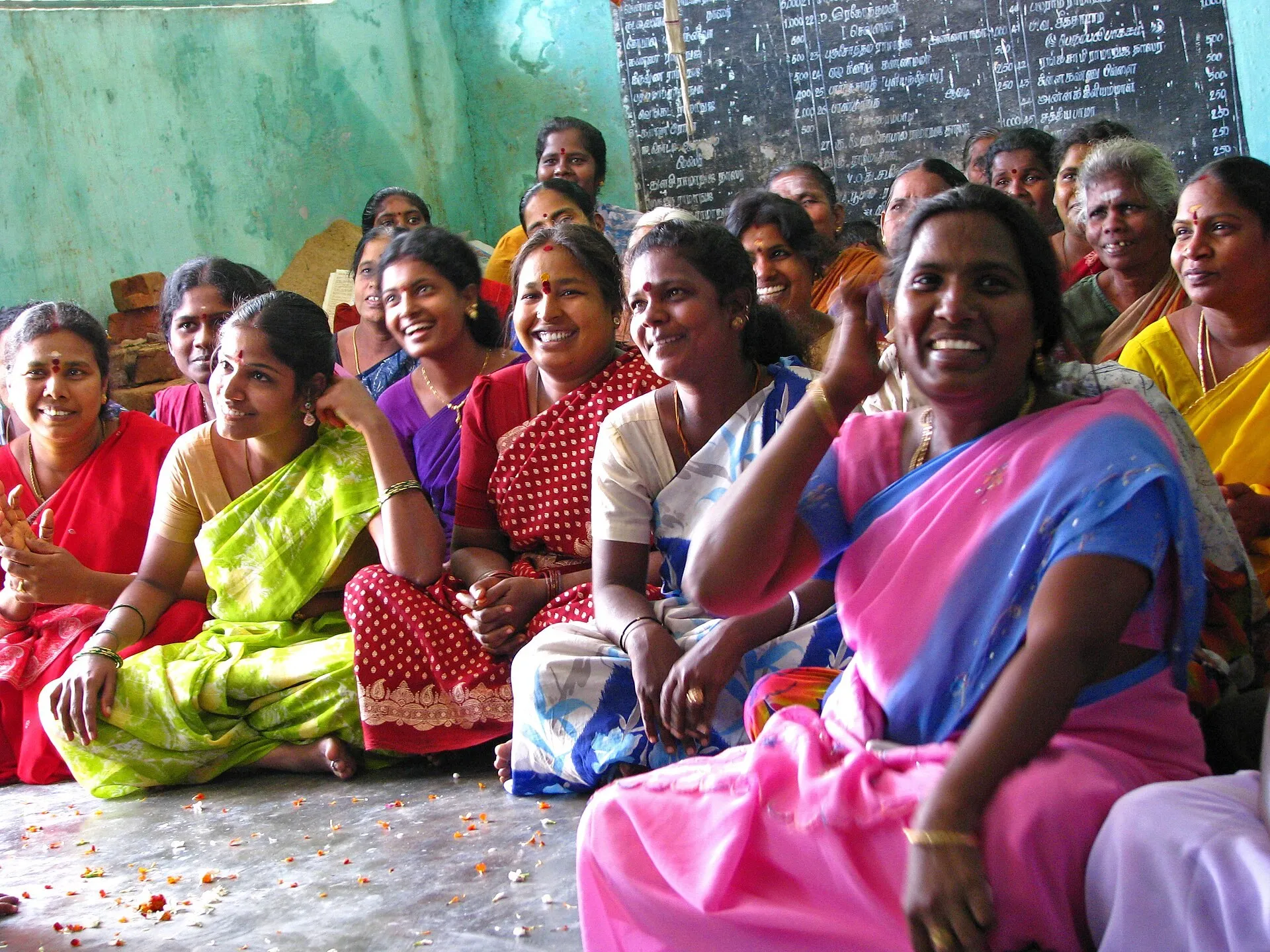
In 2011, more than one in four Indians lived on less than $3 a day, adjusted for the cost of living. By 2023, fewer than three in a hundred did. That is the finding of the World Bank’s latest brief on poverty and equity in India, published at the end of October, which calls it “one of the fastest poverty declines in the world”.
Two lines, one trend
The World Bank measures poverty against several lines. At the extreme poverty line, $3 a day in 2021 prices, India fell from 27.1% to 2.6%. At $4.20, the line it uses for lower-middle-income countries, the share dropped from 57.7% to 16.1%: around 496 million people fewer below that threshold. The bank expects the rate to keep falling, to 14.2% in 2026 and 12.1% in 2028, though more slowly.
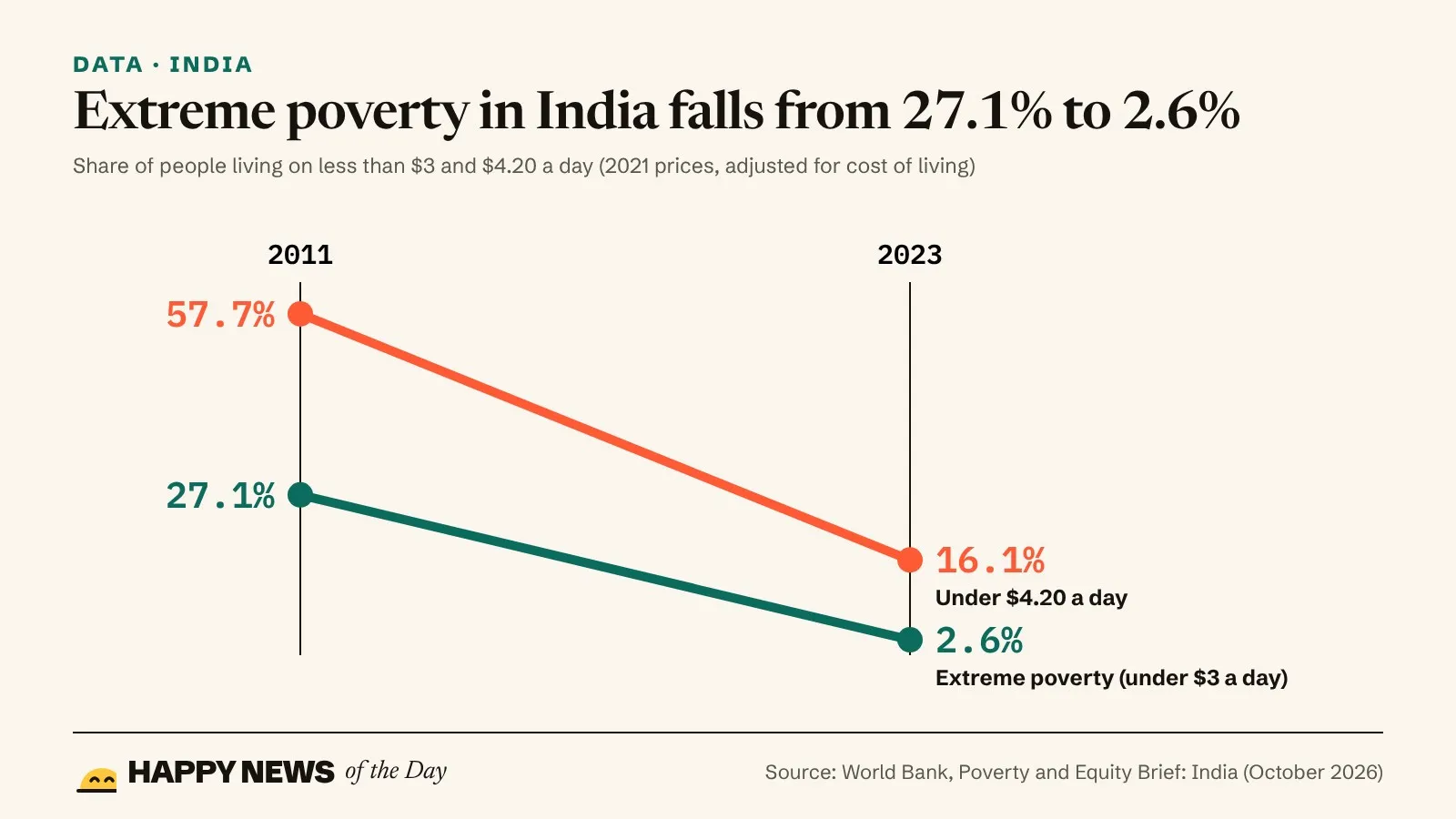 Share of India’s population living on less than $3 and $4.20 a day, in 2011 and 2023. Chart: Happy News of the Day, based on World Bank data.
According to the brief, the fall was driven by rising household consumption, more jobs, especially for women, and social transfers such as food subsidies. Between 2017 and 2023, the number of people in work grew by about 134 million.
 Fresh peas at a market in Varanasi, Uttar Pradesh, in a file photo. Photo: Jorge Royan (Wikimedia Commons, CC BY-SA 3.0).
What the report doesn’t hide
The authors stress that gains are uneven. In 2023, the top 10% of earners made about 13 times as much as the bottom 10%. Youth unemployment rose from 14.6% to 15.9% in a year, according to figures cited by Bloomberg.
The poverty that remains is highly concentrated: 57% of India’s poor live in a belt stretching from Uttar Pradesh to West Bengal. “Further reductions in national poverty will increasingly depend on enabling productive employment in these states,” the report concludes. And 2.6% of a country of more than 1.4 billion people is still tens of millions.