First mission to bring back samples from a Martian moon lifts off and heads for Mars
Japan's MMX probe lifted off on 19 October at 19:41 UTC and separated from its rocket right on schedule. It reaches Mars in August 2027 and will return at least 10 grams of Phobos soil in 2031 to reveal how Mars got its moons.
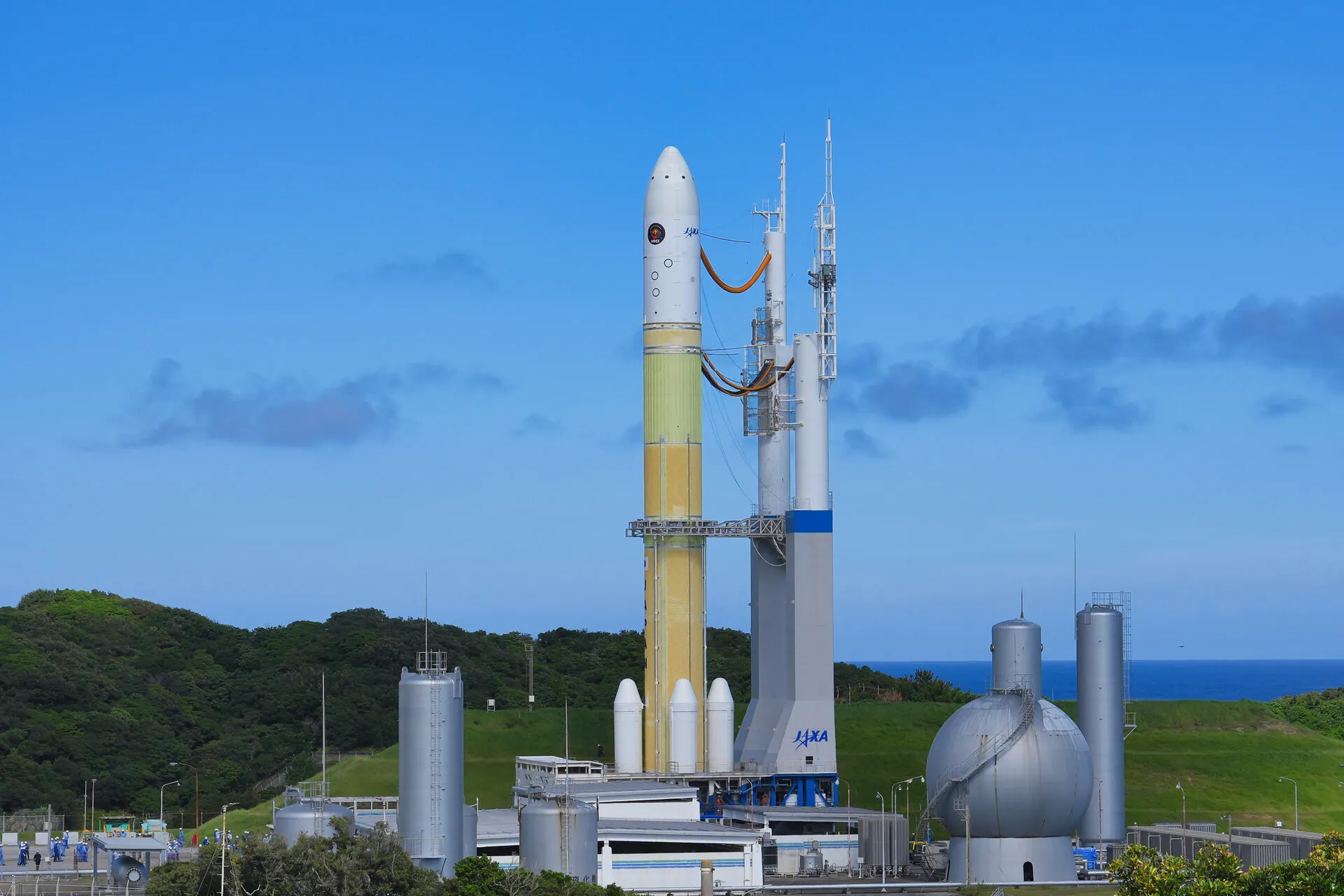
On Monday 19 October at 19:41 UTC (3:41 pm EDT; 4:41 am on Tuesday in Japan), an H3 rocket lifted off from Tanegashima, in southern Japan, carrying the Japan Aerospace Exploration Agency’s MMX (Martian Moons eXploration) probe. Its target: Phobos, the larger of Mars’s two moons.
It was the H3’s tenth flight. About 71 minutes after liftoff, the rocket’s upper stage released the probe right on schedule. MMX, which weighs almost 4,500 kg, is now under its own power and on course for Mars.
On board is Idefix, a small rover built by the French and German space agencies that will drive across Phobos. Its RAX Raman spectrometer will identify the minerals on the moon’s surface on the spot, using a matchbox-sized laser made in Spain by INTA and the Centre for Astrobiology (CSIC-INTA).
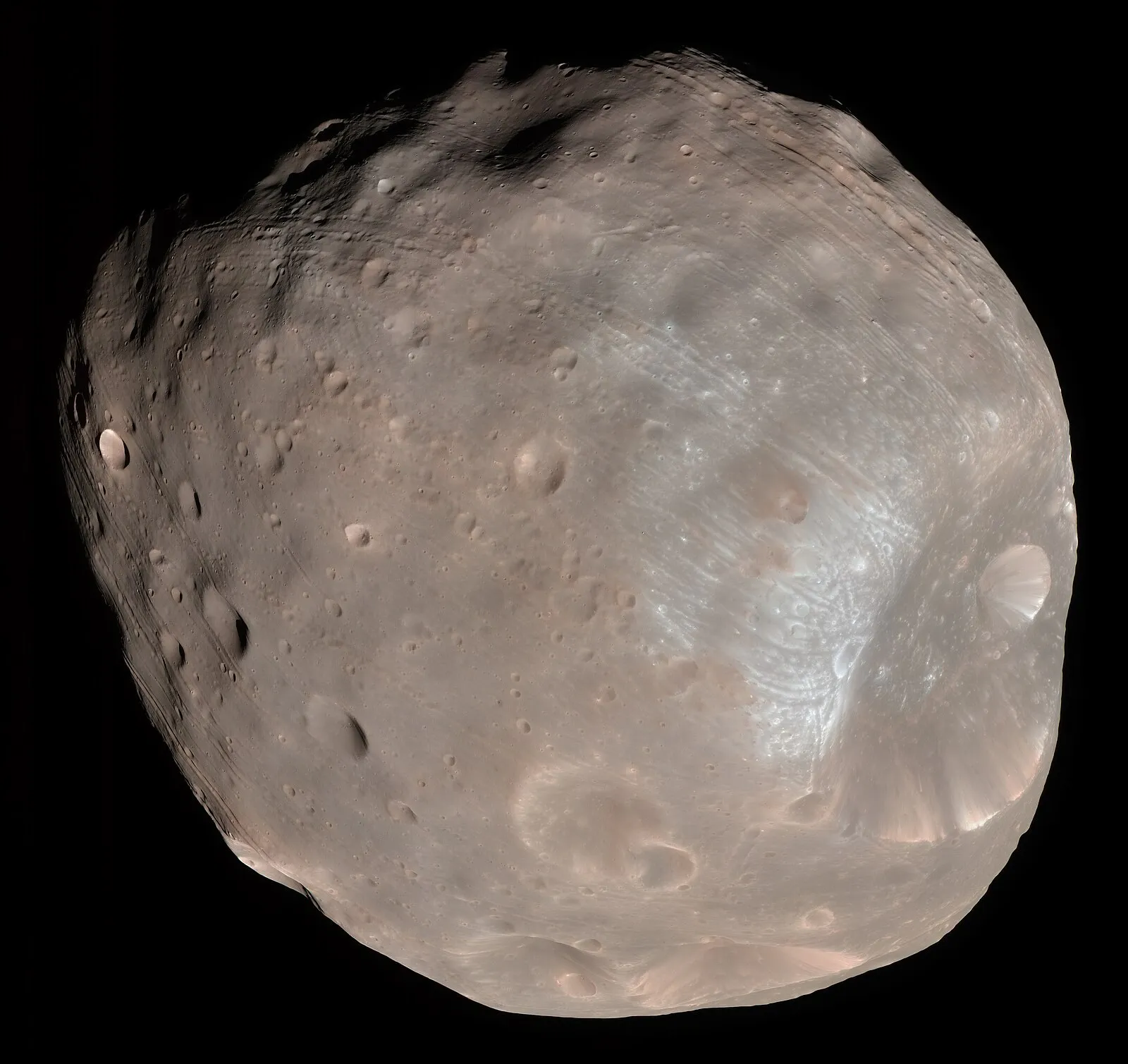
Phobos, the probe’s destination, seen by NASA’s Mars Reconnaissance Orbiter in 2008. Image: NASA / JPL-Caltech / University of Arizona (public domain).
Watch the launch
JAXA streamed the launch live on its YouTube channel: recording of the official livestream.
The plan
- August 2027: arrives at Mars and, a month later, settles in next to Phobos.
- About 18 months studying Phobos and Deimos, the other moon, up close.
- 2029: drops off the small Idefix rover, built by France’s and Germany’s space agencies.
- 2030: lands on Phobos and collects at least 10 grams of soil.
- 2031: the sample capsule lands on Earth.
Why Phobos
No one knows yet how Mars got its moons: captured asteroids, or debris from a giant impact on Mars. Phobos samples could settle it, and tell us a lot about how rocky planets, Earth included, came to be.
A team effort
The mission is Japanese, with help from NASA and the French (CNES) and German (DLR) space agencies. Japan has already brought back samples from two asteroids with Hayabusa and Hayabusa2.
Why it matters
It will be the first time humanity brings home a piece of another planet’s moon.
Sources
- DLR · The Raman spectrometer RAX
- Space.com · Japan launches historic MMX sample-return mission to Mars' moon Phobos (19 Oct 2026)
- NASA · NASA to help unlock mysteries of Mars' moons in upcoming mission
- Space.com · Japan launching bold sample-return mission to Mars moon Phobos today (19-10-2026)
- JAXA · MMX launch livestream on YouTube
- CNES · Launch of the MMX probe to the moons of Mars