China switches on a 1 GW solar plant whose tower keeps generating after dark
In Gonghe, Qinghai, the plant's 100 MW solar thermal tower, a tenth of its 1,000 MW, stores heat in molten salt and keeps generating for eight hours after sunset; the 900 MW of panels work by day. Output and CO₂ figures are PowerChina projections, not measurements.
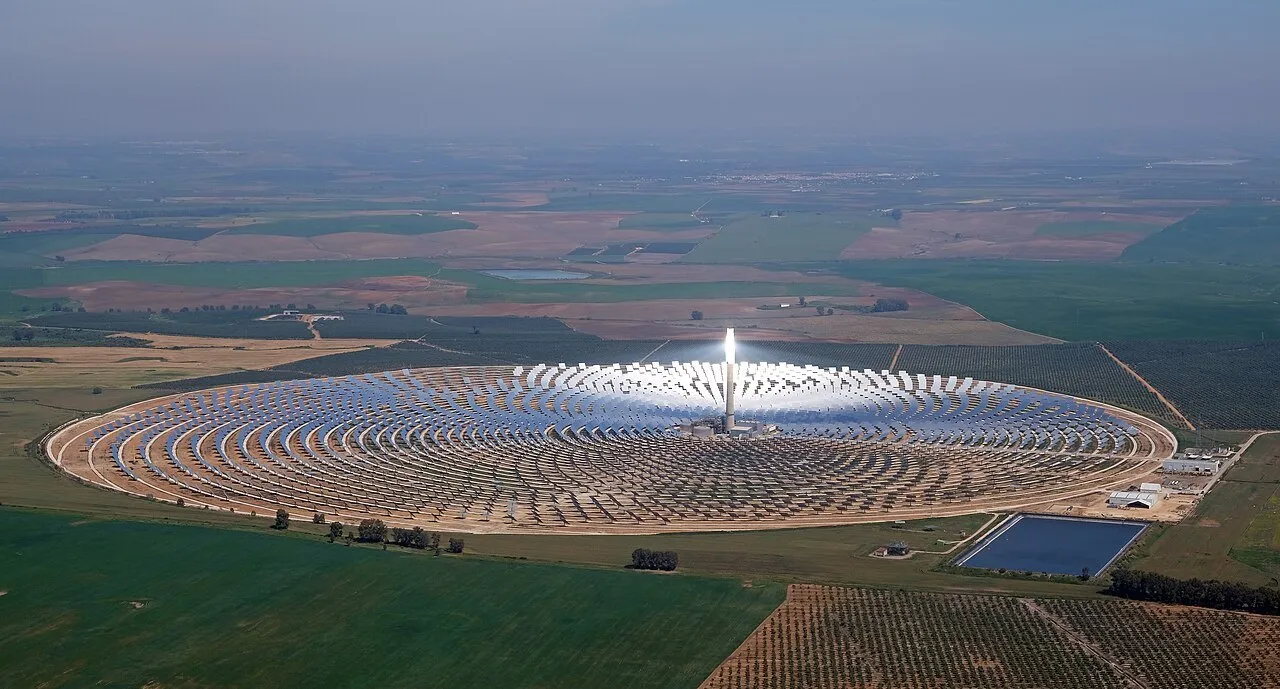
On the high Talatan plateau in Gonghe county, in China’s Qinghai province, a power plant that harvests the sun in two different ways is now up and running. State-owned PowerChina connected the 1 GW site to the grid on 1 October: 900 MW of solar panels plus a 100 MW solar thermal tower that can store heat for eight hours, letting it keep generating after the sun goes down.
The solar farm uses about 1.9 million panels. The thermal plant works differently: 10,310 mirrors, called heliostats, focus sunlight on the top of a 219-metre tower, where they heat molten salt. That heat is stored in tanks and, when needed, drives a steam turbine just like a conventional power station. A 20 MW electric heater also turns surplus midday solar power into stored heat so it is not wasted.
Why it matters
Solar power’s big limitation is that it only works in daylight. Storing heat in molten salt is one way to stretch output into the night without relying on batteries alone. PowerChina says the plant will generate about 2,200 GWh a year, save around 690,000 tonnes of coal and avoid roughly 2.07 million tonnes of CO₂ annually. The panel mounts are designed to preserve the grassland so livestock can keep grazing.
China is aiming for about 15 GW of solar thermal capacity by 2030, with the goal of bringing its cost close to that of coal power.
The catch
The output and emissions figures are projections by the state-owned company, not measurements, and have not been independently checked. The eight hours of storage also apply only to the 100 MW thermal unit: the full 1 GW site cannot run at full power through the night. Real data from its first year of operation will tell the full story.